A beautiful garden is rarely an accident. It is the result of deliberate choices regarding scale, proportion, color, and texture. While plants are the medium, the techniques belong to architecture and fine art.
1. The Foundation: Bones of the Garden
Before considering the ephemeral blooms of summer, one must establish the "bones" of the landscape. This refers to the permanent elements that provide structure year-round, particularly in winter.
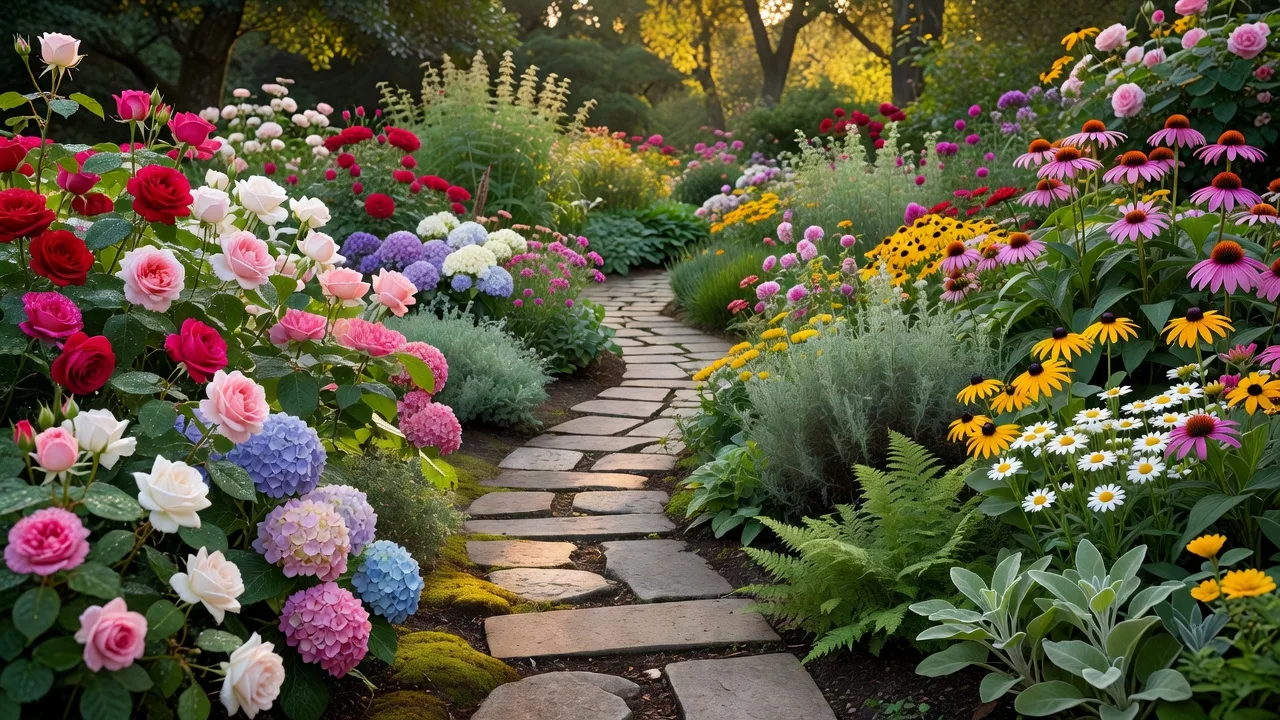
- Hardscaping: Pathways, walls, pergolas, and patios divide the space and dictate how a person moves through it. Materials (brick, flagstone, gravel) should complement the architecture of the home.
- Evergreens: Boxwood, yew, holly, and conifers provide solid masses that ground the ethereal flower borders. They act as punctuation marks in the design.
- Specimen Trees: A focal point tree (like a Japanese Maple or Dogwood) anchors a specific area and provides a ceiling to the "outdoor room."
2. The Geometry of Planting
How plants are grouped drastically affects the visual impact. Avoid the "polka-dot" effect of planting single specimens of many different varieties.
- Drifts and Masses: Plant in groups of three, five, or seven. A drift of lavender holds much more visual weight and aesthetic appeal than a single, isolated plant.
- Repetition: Repeating a specific plant, color, or shape throughout a border creates rhythm and unifies the design, guiding the eye smoothly along the landscape.
- Layering: Construct your borders like stadium seating. Tall structural plants in the back, mid-sized voluminous plants in the center, and low-growing groundcovers edging the front.
"Design is not just what it looks like and feels like. Design is how it works. A garden must work harmoniously with the site's ecology."
3. Masterful Color Theory
Color evokes emotion. Understanding the color wheel allows you to create specific moods within different areas of your property.
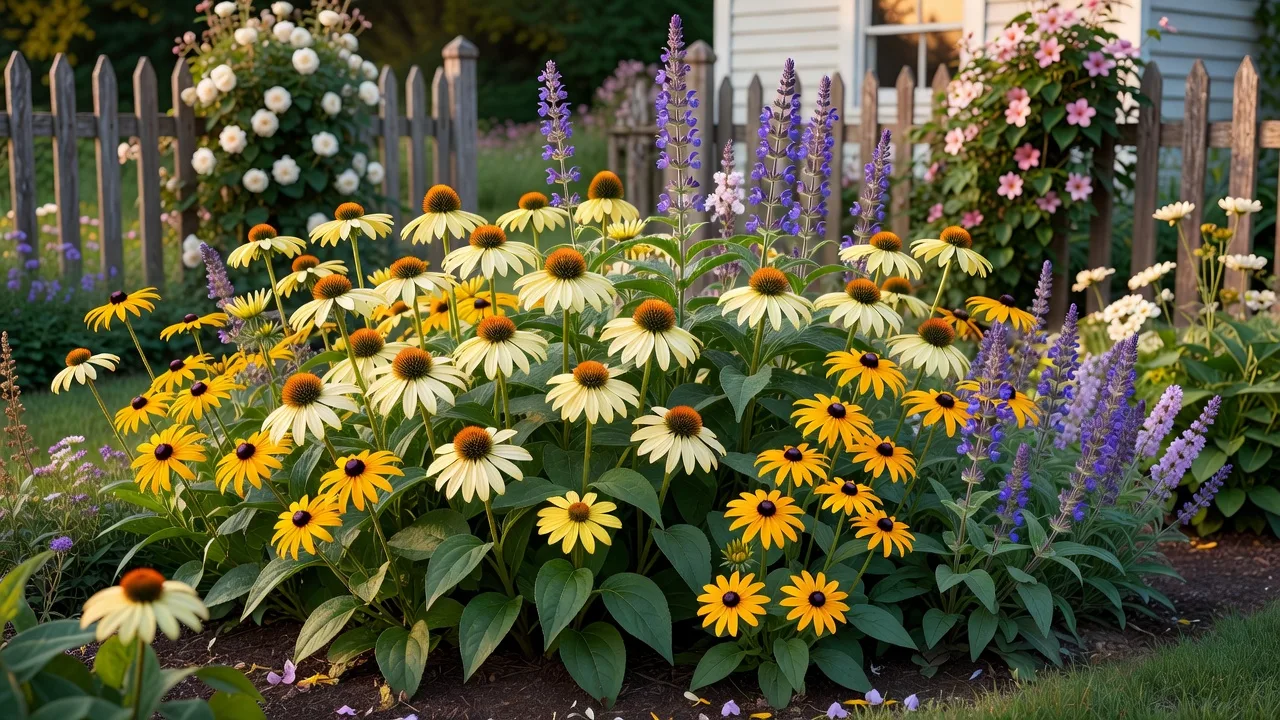
- Monochromatic: Using variations of a single hue (e.g., an all-white "moon garden") creates a sophisticated, incredibly serene atmosphere.
- Analogous: Colors adjacent on the wheel (yellow, orange, red) create a warm, vibrant, and cohesive border that feels energetic.
- Complementary: Opposite colors (purple and yellow, or blue and orange) create high contrast and striking visual tension. These pairings make each color appear more intense.
4. Texture and Form
When the flowers fade, texture remains. A garden relying solely on color will look flat. Contrast the bold, architectural leaves of a Hosta with the feathery, delicate fronds of an Astilbe or Fern. Contrast the upright, spiky form of a Foxglove with the low, mounding habit of Geraniums.